
About NIAR-Saúde
Get to know the project — its principles, objectives, workstreams, and trajectory.
The center
Developing artificial intelligence in healthcare also means defining the paths that make it ethical, safe and responsible.
UFMG's Center for Responsible Artificial Intelligence in Health (NIAR-Saúde) is a multidisciplinary initiative dedicated to the responsible development and application of artificial intelligence in healthcare, as well as to building the guidelines that steer this process.
Through the integration of research, technology, and different fields of knowledge, it seeks to transform the use of health data, promoting ethical, safe, transparent, and people-centered solutions.
Concept
Dimensions of Responsible AI
Principles that underpin ethical, secure, transparent, and trustworthy artificial intelligence.
Transparency
Makes the operation, decisions, and limitations of AI understandable and auditable.
Fairness and Bias
Promotes equity, identifies and mitigates bias and discrimination to ensure fair decisions for everyone.
Privacy and Security
Protects personal data and sensitive information, ensuring confidentiality, integrity, and compliance with legislation.
Data Governance
Establishes practices for the collection, storage, quality, sharing, and use of data with reliability, traceability, and compliance.
AI Governance
Defines policies, processes, and responsibilities to ensure ethical and secure use aligned with the organization’s objectives.
Responsible AI
Trust, ethics, and benefits for all
AI Governance + Transparency + Fairness and Bias
Fair, transparent and well-governed decisions.
Transparency + Fairness and Bias + Privacy and Security
Less bias, more trust, security, and inclusion.
Fairness and Bias + Privacy and Security + Data Governance
Equity in decisions, protection of rights, and responsible use of data.
Privacy and Security + Data Governance + AI Governance
Transparent governance over data, AI, and security.
Data Governance + AI Governance + Transparency
Accountability through explainability and AI governance.
Transparency + Fairness and Bias
Transparency for fairer AI
Fairness and Bias + Responsible AI
Less bias, more trust and inclusion
Fairness and Bias + Privacy and Security
Equity with respect for privacy
Transparency + AI Governance
Transparency on data use and protection
Privacy and Security + Responsible AI
Protection of rights and user trust
Transparency + Data Governance
Accountability through explainability
AI Governance + Data Governance
Governance aligns AI and data with its ethical objectives
Privacy and Security + Data Governance
Security enables trust and compliance
Together, these dimensions foster AI systems that are trustworthy, ethical, secure, transparent, and aligned with human values and legal and regulatory requirements.
Specific objectives
Our commitments
-
Responsible data access
Design, implement, and operate a service that enables responsible access to health data and models, ensuring ethics, security, and legal compliance.
-
Training and education
Disseminate knowledge and promote training in responsible artificial intelligence applied to healthcare, qualifying professionals in the field.
-
Computational platform
Design, implement, and validate a computational platform for developing and using responsible AI solutions, focused on transparency and traceability.
-
Applied case studies
Plan, conduct, and evaluate case studies that demonstrate, in practice, the application of responsible AI in healthcare.
-
Technology transfer
Promote the transfer of technology and knowledge related to the deployment and operation of NIAR-Saúde, expanding the impact of the solutions developed.
Goals
Workstreams
The project is organized into seven concurrent goals, distributed across four types of activity: processes and best practices, computational platform, pilot projects and dissemination.
Goal 1
Responsible access service
Specification, implementation, and operation of an experimental service for responsible access to health data and models.

Coordination
Michele Brandão
Goal 2
Training and education
Knowledge dissemination and courses on ethics and use of the NIAR environment for training in responsible AI.
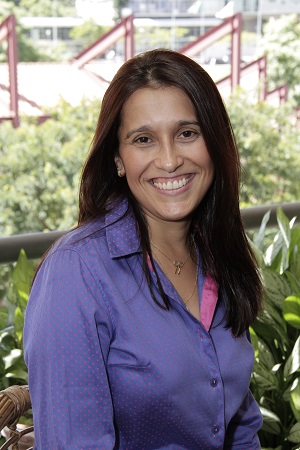
Coordination
Ana Paula Silva and Zilma Reis
Goal 3
Computational platform
Development and validation of a computational platform to support responsible AI in healthcare.


Coordination
Wagner Meira and Dorgival Guedes
Goal 4
AI for electrocardiogram
Development of an algorithm for automated ECG diagnosis, expanding access and supporting medical reporting.

Coordination
Antonio Ribeiro
Goal 5
Predictive models for NCDs
Prediction of chronic diseases and risk factors based on epidemiological and sociodemographic data.

Coordination
Deborah Malta
Goal 6
AI on SUS oncology data
Integration and predictive analysis of oncology patient data from SUS in Belo Horizonte.
Coordination
Mariangela Cherchiglia
Goal 7
Technology transfer
Dissemination and transfer of knowledge and technologies developed in the project.
Coordination
Wagner Meira
Journey
NIAR-Saúde milestones
Some of the key moments that shaped the making and development of NIAR-Saúde.
-
Signing of the TED
- Sep 2025
Project kickoff
-
NIAR Framework
- Mar 2026
Secure room inauguration