
September 17, 2026
NIAR-Saúde presents AI governance framework at Data for Policy 2026
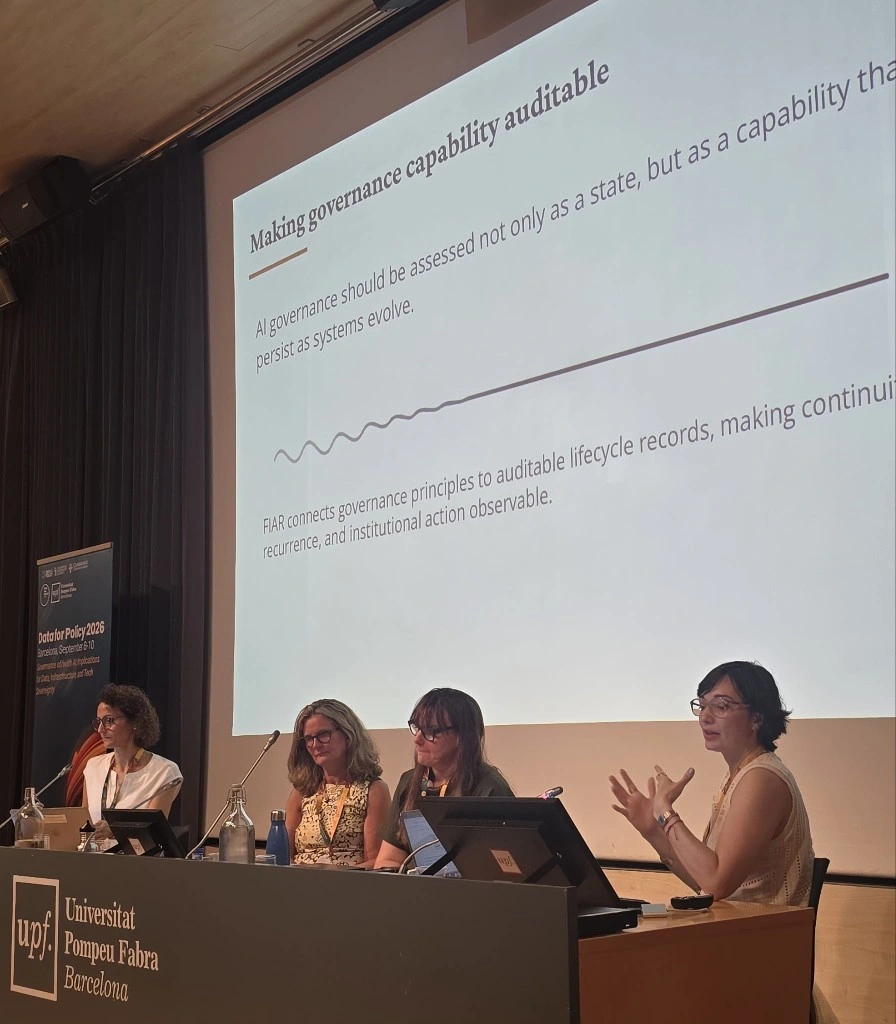
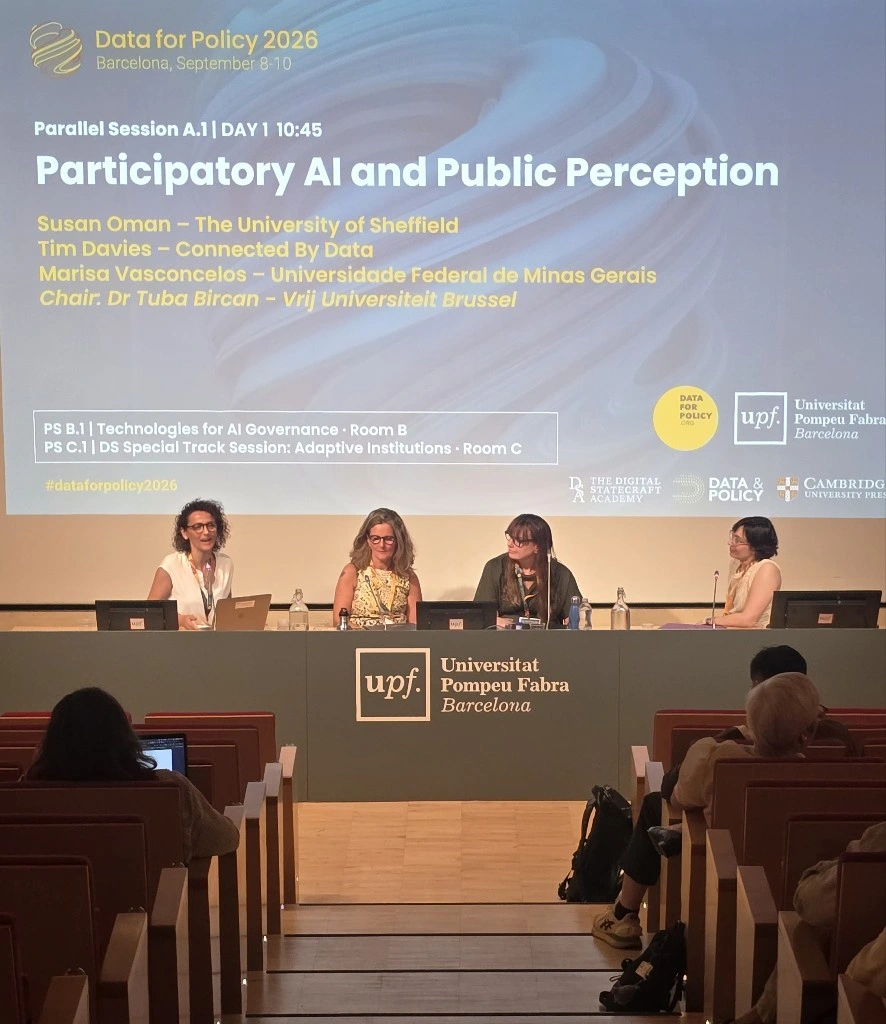
NIAR-Saúde took part in the 10th edition of Data for Policy, held from 8 to 10 September 2026 at Universitat Pompeu Fabra in Barcelona, Spain. Under the theme “Governance of/with AI: Implications for Data, Infrastructure, and Tech Sovereignty”, the conference brought together researchers, policymakers and practitioners from different countries to discuss the impacts of artificial intelligence on governance and decision-making.
During the event, the group presented the work “From Principles to Longitudinal AI Governance: An Evidence-Based Framework for Continuous Oversight”, which investigates how responsible AI principles can be translated into concrete practices of governance and continuous oversight of artificial intelligence systems.
The paper introduces FIAR (Framework for Institutional AI Responsibility), a proposal that organizes AI governance around the production and assessment of evidence related to different dimensions of responsibility. The framework also establishes maturity levels representing how these practices evolve, from isolated initiatives to institutionalized processes of continuous oversight.
Its application is illustrated through a model for forecasting hospitalizations due to respiratory diseases, developed with data from Brazil’s Unified Health System (SUS). The case study shows how evidence on aspects such as performance, fairness and explainability can be incorporated into the system’s governance, together with the definition of institutional responsibilities and monitoring mechanisms throughout its lifecycle.
In doing so, the work seeks to bring responsible AI principles closer to institutional practice, offering a structured, evidence-based approach to monitoring AI systems from development and evaluation through to use and any subsequent changes.
The full version of the work is available in the Data for Policy 2026 proceedings and can be accessed on NIAR-Saúde’s publications page.